
Community profile · Uganda
Padhola / Jopadhola
Jopadhola · Padhola
The Jopadhola are a distinct community in eastern Uganda, with their own local history, language and cultural institutions.
Introductory profile · Community review invitedFrom the original KP Jaluo Abroad heritage book
Community history
and cultural account.
Watch and explore
Videos and documentaries
At a Glance
The Jopadhola—often simply called Adhola—are a Nilotic Luo community living chiefly in Uganda’s Tororo District. Speaking Dhopadhola, a Western Nilotic language, they form a distinct branch of the wider Southern Luo family that also includes the Acholi, Alur, and Luo of Kenya and Tanzania. Current estimates place the Jopadhola population at roughly half a million people, representing a significant minority in Uganda’s demographic mosaic.
“Pa Adhola”: Land and Name
The community’s homeland is known as Padhola, a contracted form of Pa Adhola—“the place of Adhola,” their legendary founding ancestor. Local folklore remembers Adhola’s original name as Onongor. During the long south easterly migration from Bahr el Ghazal (South Sudan) in the sixteenth century, Onongor suffered a persistent leg wound—adhola in Luo. The nickname stuck, and the clan that chose to remain with him became the Jopadhola (“people of Adhola”), while the land they later cleared and settled inherited the name Padhola.
Meanwhile, another group, led by Owiny, a brother of the Jopadhola founder Adhola, continued the migration eastward as Joka Owiny (People of the Owiny) into Kenya.
During wars, neighbouring Baganda speakers, hearing the Jopadhola rallying cry widoma! (“you are in trouble!”), rendered it as Badama, a label still found in some historical records.
Migration & Historical Context
The Jopadhola are part of the greater Southern Luo migration that began centuries ago in the Bahr-el-Ghazal region of present-day South Sudan. As this movement unfolded, different Luo groups branched off at various points along the way. The ancestors of the Jopadhola initially settled in central Uganda but eventually moved further south-east into what is now Tororo District in Eastern Uganda.
Social Structure
Jopadhola society is semi centralised. Instead of an overarching monarchy, authority resides in more than 52 patrilineal clans (Nono). Each clan maintains its own lineage histories, cultural rites, and dispute resolution forums, yet all acknowledge bonds of common origin.
Cultural Leadership
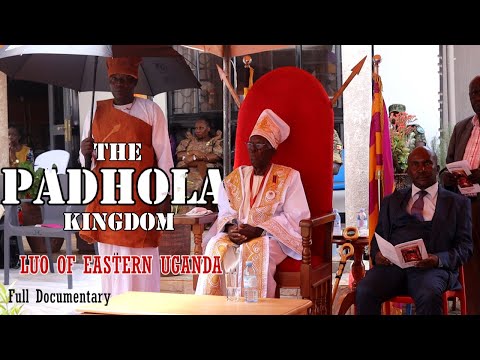
Kwar Adhola Moses Stephen Owor is the current king (His Highness) for the Adhola people. The Nyakiriga Shrine , a sacred cultural site in Padhola, serves as a place of ancestral reverence and is central to important communal rites and spiritual gatherings.
📺 Watch Full Documentary on the Padhola
Watch related video on YouTube ↗Finished reading?
Watch the story
Identity and naming
Recognising the community
on its own terms.
This profile uses both Padhola and Jopadhola as search terms while inviting contributors to confirm preferred usage and spelling in their locality.
KP Jaluo Abroad extends sincere gratitude to the elders, cultural custodians, storytellers, researchers, families and community members whose knowledge, memories and contributions have helped bring the story of Padhola / Jopadhola to light. Your willingness to share and document this heritage helps preserve it for present and future generations. We appreciate everyone who has walked alongside KP Jaluo Abroad in making this community story visible.
Areas of heritage documentation
Dhopadhola language and oral traditions
Local settlement, clan and family histories
Cultural practices, music and community institutions
Links with neighbouring communities and diaspora
Related directory


