
Community profile · Uganda
Kumam
Kumam · Kumam-speaking communities
The old KP Jaluo Abroad heritage book includes a detailed profile of the Kumam community in Uganda. The material is presented here as a preserved source account pending community and editorial review.
Legacy source profile · Review requiredFrom the original KP Jaluo Abroad heritage book
Community history
and cultural account.
Watch and explore
Videos and documentaries
People and Homeland
The Kumam are a Nilo-Hamitic ethnic group with an estimated population of 720,000 (2024 census), residing primarily in Eastern Uganda. They are concentrated in the Kumam Sub-Region, which spans across Kaberamaido, Soroti, Soroti City, Kalaki, and parts of Serere, Dokolo, and Amolatar districts. These areas lie in the western part of the Teso Sub-Region and the southeastern edge of the Lango Sub-Region.
In the Teso region, the Kumam share Soroti District with the Iteso, inhabiting areas such as Serere, Asuret, Kamuda, Katine, Soroti City, and its surrounding outskirts near Kaberamaido. In the Lango region, they are found particularly in Dokolo District, which was formerly part of Lira District. Many Kumam also reside along the shores of Lake Kyoga, especially in areas such as Namasale.
Origins and Migration
The origins of the Kumam trace back to early fishing, agricultural, and pastoralist communities in the Ethiopian highlands, possibly the Oromo region, around 1560 AD. Due to land pressure and environmental changes in the 17th century, they migrated southward into present-day Uganda.
Over time, interactions with the Lango, who themselves had undergone cultural assimilation by the Acholi, significantly influenced the Kumam. These interactions led to the loss of the original Leno dialect, which was similar to the Ateker languages, and a gradual adoption of Luo vocabulary and linguistic traits. This process of cultural and linguistic assimilation is a major reason why the Kumam are now classified as part of the Luo family, despite their distinct historical roots.
Leadership
The traditional leadership of the Kumam people is recognized through the Kumam Kingdom, which upholds the community’s cultural values and heritage. The current King is His Royal Highness Wuon Ateker Papa me Kumam Raphael Otaya, who plays a central role in uniting the Kumam and affirming their identity within Uganda’s diverse ethnic landscape.
Identity and Linguistic Debate
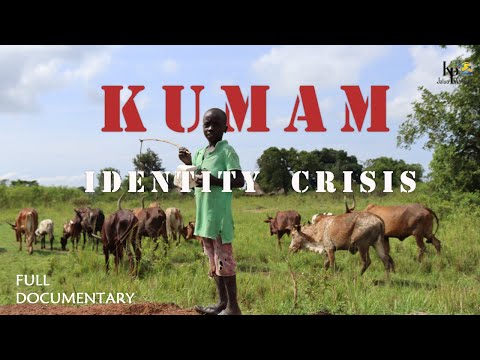
Much like the Lango, the Kumam identity has sparked ongoing debate. While a portion of the Kumam population rejects the classification of Kumam as Luo, citing their distinct historical and linguistic roots, another segment acknowledges the deep influence of Luo culture and language in shaping modern Kumam society.
His Royal Highness Raphael Otaya has publicly affirmed that the Kumam are indeed part of the broader Luo family, emphasizing shared history and linguistic evolution. Nevertheless, the discussion continues within Kumam society, highlighting the complexity and diversity of ethnic identities in Uganda.
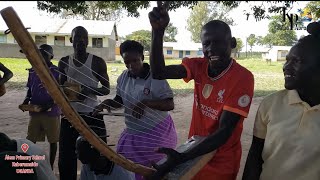
📺 Watch Full Documentary on the Kumam
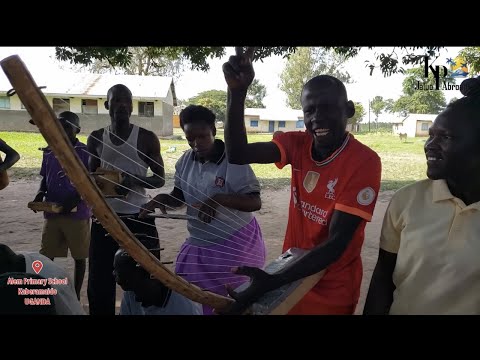
📺 Watch KUMAM CUNY PINY SONG
Watch related video on YouTube ↗Finished reading?
Watch the story
Identity and naming
Recognising the community
on its own terms.
The source book uses the term “Nilo-Hamitic” and discusses the Kumam identity and linguistic debate. These classifications and claims are retained as source material, not independently verified conclusions.
KP Jaluo Abroad extends sincere gratitude to the elders, cultural custodians, storytellers, researchers, families and community members whose knowledge, memories and contributions have helped bring the story of Kumam to light. Your willingness to share and document this heritage helps preserve it for present and future generations. We appreciate everyone who has walked alongside KP Jaluo Abroad in making this community story visible.
Areas of heritage documentation
People and homeland
Origins and migration
Leadership and social organisation
Identity, language and cultural life
Related directory


